
Reviewed by Siamak Firooz, structural engineer and CEO of CHC Remodel, a local Kirkland remodeling contractor with 80+ five-star Google reviews and 250+ reviews across other directories. Last reviewed: October 12, 2026.
A reliable remodeling contractor is registered with Washington L&I, carries a bond and liability insurance, has done projects like yours, and gives you a clear written estimate. Checking all four is free, and it protects one of the largest purchases you will make for your home.
This guide shows how to find contractors in Seattle and the Eastside, check them using free state tools, and compare estimates fairly. It is written by CHC Remodel, a Kirkland remodeling contractor with more than 25 years of experience.
Quick answer: how do you find a reliable contractor for a home renovation?
- Describe the project in one page: rooms, goals, must-haves and a rough budget.
- Build a shortlist of three to five contractors from referrals, reviews and project photos.
- Check each one’s Washington L&I registration, bond and insurance using the state’s free lookup.
- Ask for recent references from projects similar to yours.
- Get written estimates from your top two or three and compare scope before price.
- Read the contract and watch for red flags such as cash-only deals or pressure to sign.
The rest of this guide explains each step and what to look for.
On this page
- Step 1: Describe your project
- Step 2: Where to find contractors
- Step 3: Choose the right type of contractor
- Step 4: Ask for references
- Step 5: Read reviews for patterns
- Step 6: Judge communication
- Step 7: Check license, bond and insurance
- Step 8: Compare estimates
- Should you choose the lowest bid?
- Step 9: Who runs the project
- Step 10: Permits
- Step 11: Read the contract
- Step 12: Red flags
- Questions to ask
- Frequently asked questions
Step 1: Describe your project before you call anyone
A one-page project description gets you comparable estimates. Without it, each contractor prices a different project and the numbers mean little.
Write down:
- The rooms involved and what bothers you about them now
- What must change and what is nice to have
- Whether you want to move walls, plumbing or windows
- A rough budget range and when you hope to start
Share the same description with every contractor you contact.
Step 2: Where to find remodeling contractors in Seattle
The best leads usually come from people who have already remodeled. Use several sources and look for the same names coming up.
- Referrals from neighbors, friends and coworkers who remodeled recently
- Google reviews and project photos on a contractor’s Business Profile
- Houzz and Nextdoor, where homeowners post finished work and recommendations
- Trade associations such as the Master Builders Association of King and Snohomish Counties
Aim for a shortlist of three to five companies. More than that makes comparisons harder, not better.
Start early. Contractors with good reputations are often booked weeks or months ahead, so begin your search well before you want work to start.
Step 3: Choose the right contractor for your type of remodel
The right contractor has finished projects like yours, not just “remodeling” in general. Ask to see two or three similar projects and who worked on them.
How to choose a bathroom remodeler
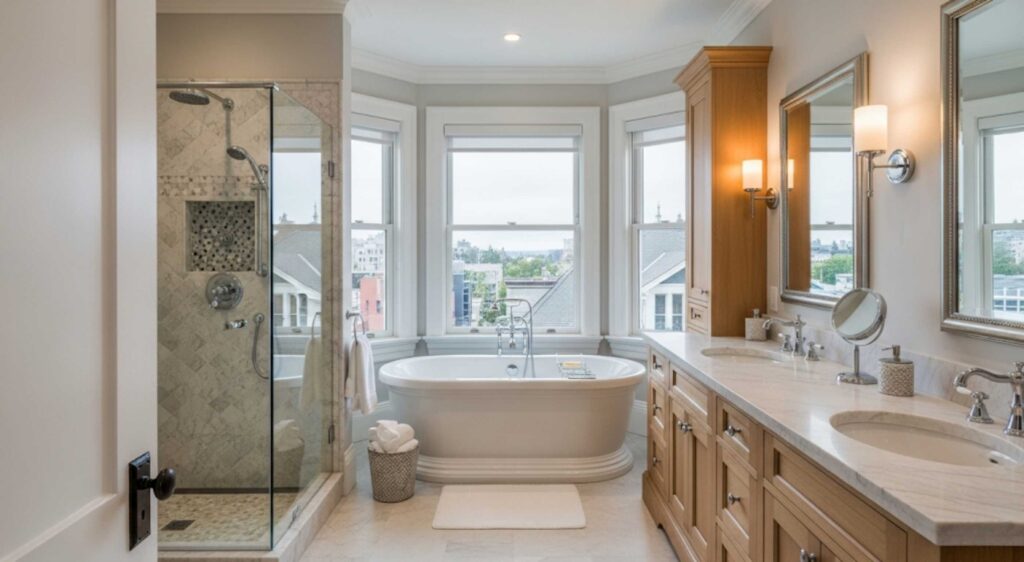
Bathrooms pack plumbing, waterproofing, ventilation, tile and electrical work into a small room. Ask how the contractor waterproofs showers, handles venting and protects the rest of the house during work. See CHC Remodel’s approach on the bathroom remodeling page.
How to compare kitchen remodeling contractors
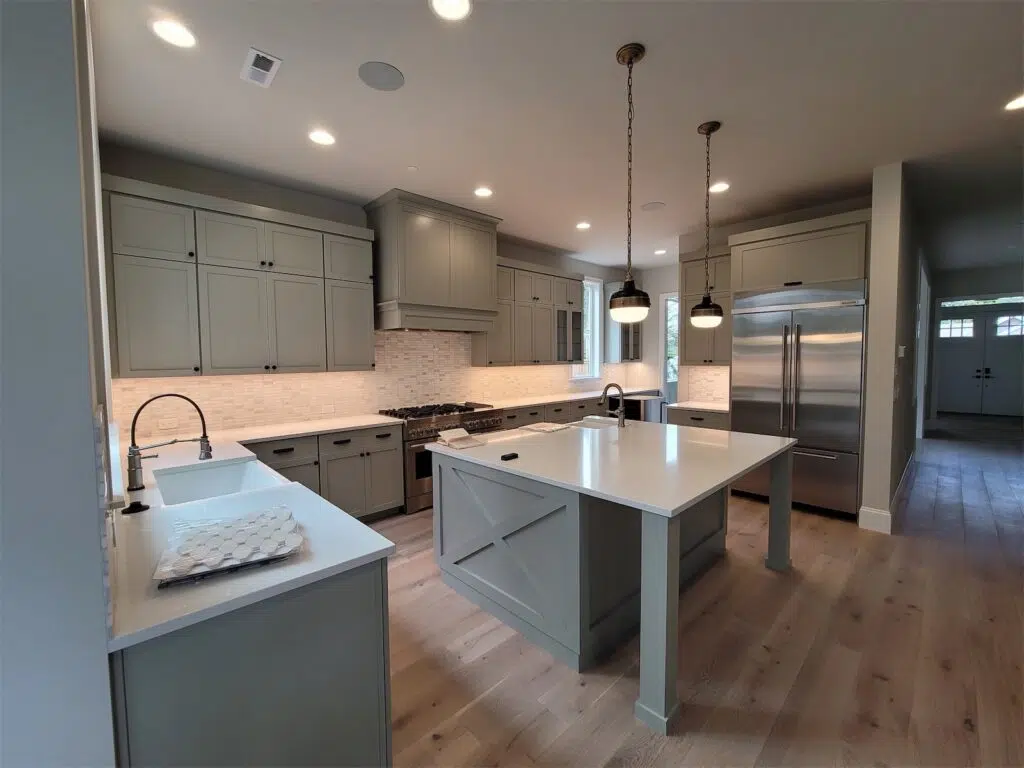
Kitchens combine layout, cabinets, appliances, countertops, plumbing and electrical work. Ask who plans the layout and cabinets, and how appliance specifications are checked before cabinets are ordered. See the kitchen remodeling and custom kitchen cabinets pages.
When the project involves walls, beams or an addition
Removing a wall or adding space can change how loads travel through the house. Ask whether a structural engineer reviews that work before construction starts. CHC Remodel’s CEO, Siamak Firooz, is a structural engineer, so structural questions are part of how we plan whole-home remodels and home additions.
Step 4: Ask for recent references
References from the last two years tell you how the contractor works today. Ask for two or three from projects similar in size to yours.
Good questions for a past client:
- Did the final scope match the written estimate?
- How were changes and extra costs handled?
- How quickly did the contractor answer questions?
- Would you hire them again?
You can also ask for a supplier reference, such as a lumber yard or cabinet supplier. Suppliers can tell you whether the contractor pays its bills on time, which matters because unpaid suppliers can file liens.
Step 5: Read reviews for patterns, not stars
A pattern across many reviews matters more than one great or one bad review. Look for repeated comments about communication, cleanup, scope changes and how problems were fixed.
Also read how the contractor replies to negative reviews. A calm, specific reply is a good sign.
Step 6: Judge communication before you hire
How a contractor answers your first call is often how they will answer during the project. Notice whether they return calls, ask about your goals, and explain things clearly.
A contractor who asks good questions about your house before pricing it is usually planning carefully.
Step 7: How to check if a contractor is licensed, bonded and insured in Washington
In Washington, a “licensed contractor” means a contractor registered with the Department of Labor & Industries (L&I). Working, bidding or advertising without that registration is illegal, and the state lets anyone check a contractor for free.
This is the most important way to vet a contractor before hiring. Use the L&I Verify a Contractor tool. Search by business name or registration number and check the items below.
| What to check | What it should show | Why it matters |
|---|---|---|
| Registration | Active, in the same business name you were given | Unregistered contracting is illegal in Washington |
| Bond | Active. General contractors must carry a $30,000 bond, specialty contractors $15,000 | Offers limited protection if the work is not completed or is done improperly |
| Liability insurance | Active policy on file with L&I | Covers damage to your property during the work |
| Registration number on paperwork | The same number on the estimate, contract and ads | Washington requires it on bids and advertising |
| Violations or claims | Few or none, and resolved | Shows how past disputes were handled |
The bond and insurance minimums come from L&I’s contractor registration requirements. Insurance must be at least $250,000 combined single limit, or $200,000 public liability plus $50,000 property damage.
Also ask whether the contractor has employees and carries Washington workers’ compensation through L&I. A Washington insurer, PEMCO, warns that homeowners can face claims if an uninsured worker is hurt on their property.
A bond is not full protection
The state’s own notice warns that a contractor’s bond “might not be sufficient to cover a claim” and is shared across all of that contractor’s jobs (L&I Disclosure Statement, F625-030-000). Treat registration as the first check, not the final decision.
The disclosure statement and lien releases
For residential jobs of $1,000 or more, Washington contractors must give you a signed disclosure statement, also called a Notice to Customer. It explains that unpaid suppliers or subcontractors can place a lien on your home, so you could pay twice for the same work.
You can protect yourself by asking for lien releases from suppliers and subcontractors and by holding back an agreed retainage until the work is done. WashingtonLawHelp explains these rights in plain language.
Homes built before 1978
Remodeling that disturbs painted surfaces in older homes needs lead-safe work practices. In Washington, firms and renovators doing this work must hold RRP certification from the Department of Commerce. If your home was built before 1978, ask about it before you sign.
CHC Remodel is registered with Washington L&I as Contemporary Home Construction, LLC, registration number CONTEHC837KA. You can look us up with the same tool.
Step 8: How to compare remodeling estimates
Compare what each estimate includes before you compare the totals. Two estimates for “a kitchen remodel” can describe very different projects.
Get written estimates from your top two or three contractors, all based on the same project description. Then line them up side by side:
| Line item | What to look for |
|---|---|
| Demolition and disposal | Included, or billed separately |
| Structural work | Whether beams, headers or engineering are included |
| Plumbing and electrical | Moving fixtures and outlets, or only replacing them |
| Cabinets and countertops | Brand, construction and who measures and installs them |
| Finishes and allowances | Dollar allowances for tile, fixtures and flooring, and whether they are realistic |
| Permits | Who applies, and whether fees are included |
| Cleanup and protection | Dust control and protection of floors and other rooms |
| Payment schedule | Payments tied to finished work, not just dates |
Low allowances are a common reason a low estimate grows later. Ask each contractor what their allowance actually buys.
Download the contractor-estimate comparison sheet
A free worksheet for comparing up to three estimates line by line.
Should you choose the lowest bid?
Not automatically. The lowest bid is often missing scope, using lower allowances, or leaving out permits. Choose the estimate with the clearest scope and the contractor you trust to deliver it. Our hiring guide covers this decision in more depth.
Step 9: Ask who will run the project
Know who you will talk to every week and who is on site. Ask which work the company does with its own crew and which trades are subcontracted.
Also ask how changes are handled. A good answer is a written change order with the price agreed before the work is done.
Step 10: Talk about permits early
Structural changes, additions, and plumbing or electrical changes usually need permits. In Seattle, the Seattle Department of Construction and Inspections issues building and electrical permits. Eastside cities such as Bellevue, Kirkland and Redmond run their own permit departments, so confirm your property’s actual jurisdiction.
A reliable contractor tells you which permits your project needs and who will apply. Be cautious if a contractor suggests skipping them.
Step 11: Read the contract before you sign
The contract should match the estimate you compared. Check that it includes:
- A detailed scope of work and the materials or allowances
- The total price and a payment schedule tied to progress
- How change orders are priced and approved
- Who obtains permits and arranges inspections
- The contractor’s registration number and business name
- How cleanup and the final walkthrough are handled
If something you discussed is not in writing, ask for it to be added.
Step 12: Red flags when hiring a remodeling contractor
Walk away, or at least slow down, if a contractor:
- Is not registered with L&I, or the name doesn’t match the registration
- Asks for cash only or a large payment before any work starts
- Pressures you to sign today to get a special price
- Gives a verbal estimate and avoids putting scope in writing
- Suggests skipping permits to save money
- Has no references from recent, similar projects
- Can’t tell you who will be on site or who handles changes
One red flag deserves a direct question. Several together are a reason to keep looking.
Questions to ask a remodeling contractor
Bring these to your first meeting. Clear, specific answers are a good sign.
- What is your Washington L&I registration number?
- Have you completed projects like mine in the last two years? Can I see them?
- Can I speak with two or three of those clients?
- Who will manage my project, and how often will we talk?
- Which work do you do yourselves, and which do you subcontract?
- Which permits will this project need, and who applies for them?
- Does an engineer review structural changes before construction?
- What do the allowances in your estimate actually buy?
- How are change orders priced and approved?
- What does your payment schedule look like?
- Will you provide lien releases from suppliers and subcontractors?
- How do you protect the rest of the house and handle cleanup?
Frequently asked questions
How do I find the best remodeling contractor in Seattle?
The best contractor for you is the one with the right experience for your project, an active Washington L&I registration, recent references and a clear written estimate. Shortlist three to five, check each one, and compare scope before price. Ratings alone don’t tell you who fits your project.
What makes a good remodeling contractor?
A good remodeling contractor is registered, bonded and insured, has finished projects like yours, explains the scope in writing, and handles permits openly. They answer questions clearly, tie payments to progress and put every change in a written change order.
How can I tell if a contractor is trustworthy?
Check that the registration on L&I matches the name on the estimate, call recent clients, and read reviews for patterns. Trustworthy contractors give written estimates, don’t ask for cash only, don’t pressure you to sign quickly, and agree to provide lien releases.
Are top-rated contractors on review sites always the right choice?
Not always. High ratings show customers were happy, but they don’t confirm registration, insurance or experience with your type of project. Use reviews to build a shortlist, then verify each contractor with L&I and references.
How much should I pay a contractor upfront?
Keep the first payment modest and tie later payments to finished stages of work, as written in the contract. Be cautious of large upfront payments, cash-only requests or payments for work not yet done. You can also hold back an agreed retainage until the project is complete.
How do I find a reliable remodeling contractor in Seattle?
Start with referrals and Google reviews, then shortlist three to five contractors who have done projects like yours. Check each one on the Washington L&I Verify a Contractor tool, call recent references, and compare written estimates based on the same project description.
How do I check if a contractor is licensed in Washington?
Use the free L&I Verify a Contractor tool at secure.lni.wa.gov/verify. Search by business name or registration number. Confirm the registration is active, the bond and insurance are current, and the name matches the estimate and contract.
Is a registered contractor the same as a licensed contractor in Washington?
Yes, for general remodeling. Washington “registers” general and specialty contractors through L&I rather than issuing a general contractor license. Electricians and plumbers also need their own trade certifications, so ask who will do that work.
What bond and insurance does a Washington contractor need?
General contractors need a $30,000 bond and specialty contractors a $15,000 bond. Both need liability insurance of at least $250,000 combined, or $200,000 public liability plus $50,000 property damage, according to L&I.
How do I find a general contractor for a remodel?
Look for a general contractor when the project involves several trades, such as a kitchen, bathroom, addition or whole-home remodel. The same checks apply: L&I registration, similar past projects, references and a detailed written estimate. Learn how CHC Remodel works as a general contractor in Seattle.
What is a lien release, and why should I ask for one?
A lien release is a document from a supplier or subcontractor confirming they have been paid. Without it, an unpaid supplier could place a lien on your home even if you paid the contractor. Ask for releases as the work is paid for.
What should a remodeling estimate include?
A useful estimate lists the scope room by room, structural work, plumbing and electrical changes, cabinets and finishes, dollar allowances, permits, cleanup and a payment schedule. If an item is missing, ask whether it is excluded or simply not written down.
About the CHC Remodel team
CHC Remodel is a residential remodeling contractor based in Kirkland, WA, with more than 25 years of experience serving Seattle and the Eastside. Our work focuses on kitchens and custom cabinet planning, bathrooms, whole-home remodels, additions and basements.
Homeowners rate our work highly: CHC Remodel has 80+ five-star reviews on Google and more than 250 reviews on other review sites.
- Siamak Firooz, CEO, is a structural engineer with a master’s degree in engineering. His engineering background shapes how we plan structural and layout changes.
- Marjan Sabounchi is an architect and interior designer with a Ph.D. in Architecture and nearly two decades of design experience.


That mix of construction, structural engineering and design means layout, structure and finishes are planned together. See finished projects in our gallery and how we work on our remodeling process page.
Planning a remodel in the Seattle area?
Use the checklist above with every contractor you interview, including us. When you are ready, tell us about your project and we will walk through scope, structure and next steps with you.
★★★★★ Top-rated on Google: 80+ five-star reviews250+ reviews on other sites25+ years of experienceStructural engineer and architect on the team
CHC Remodel · Contemporary Home Construction, LLC · 11335 NE 122nd Way Suite 105, Kirkland, WA 98034 · WA registration CONTEHC837KA
Related guides
Verified Credentials
WA L&I registration
CONTEHC837KA
★★★★★ 80+ five-star Google reviews
250+ reviews across other directories
Contemporary Home Construction, LLC (CHC Remodel). Look us up with the same free state tool this guide recommends.
Planning a Remodel?
Tell us about your project and we will walk through scope, structure and next steps.