SEATTLE FENCE MATERIAL GUIDE UPDATED 2026
Pressure-Treated Wood vs. Cedar vs. Vinyl Fencing for Seattle Homes: What Should You Choose?
Compare Seattle fence materials by rain performance, maintenance, privacy, appearance, repairability, slope, wind exposure and long-term care—before choosing a system.
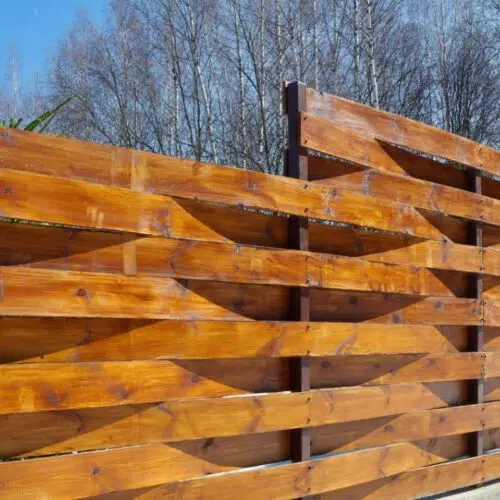
Choose for the whole propertyPurpose → Site → Material
Quick Answer: Which Fence Material Is Best for a Seattle Home?
Choose Western Red Cedar if you want a natural Pacific Northwest appearance and are willing to clean and maintain the finish. Choose vinyl if minimizing staining, painting and wood-decay concerns is your priority. Choose pressure-treated wood when you want the flexibility of a wood fence while keeping initial material choices more budget-conscious.
There is no single best material for every Seattle property.
The right choice depends on:
- how much maintenance you will realistically do;
- whether you want natural wood or a manufactured appearance;
- how much privacy you need;
- how wet, shaded or debris-heavy the site is;
- whether the ground slopes;
- how exposed the fence is to wind;
- how important individual-component repairability is;
- whether the fence sits near a retaining wall or street frontage;
- your preferred fence style;
- the quality of the actual material and installation system.
For Seattle specifically, do not choose a fence material based only on a showroom sample.
Ask:
What will happen to this material after years of rain, shade, organic debris, cleaning and normal repairs on this particular property?
Seattle Fence Material Comparison at a Glance
| Factor | Pressure-Treated Wood | Western Red Cedar | Vinyl |
|---|---|---|---|
| Natural appearance | Yes | Excellent natural character | No; manufactured appearance |
| Custom design flexibility | High | High | Depends on product system |
| Staining / painting options | Yes | Yes | Generally selected in finished color |
| Refinishing | Expected depending on desired appearance | Expected if preserving a finish | No wood-style refinishing |
| Rot concern | Treatment improves resistance | Naturally decay-resistant | Does not decay like wood |
| Cleaning | Required as conditions demand | Required as conditions demand | Periodic cleaning still required |
| Individual-board repair | Usually straightforward | Usually straightforward | Depends on fence system/components |
| Uneven or sloped sites | Highly adaptable | Highly adaptable | Product/system dependent |
| Natural PNW aesthetic | Moderate | Strong | Different aesthetic |
| Consistent manufactured appearance | No | No | Strong |
| Best for homeowner who hates refinishing | Usually not first choice | Usually not first choice | Often strongest fit |
| Best for homeowner who values natural grain | Good | Strongest fit | Not the same experience |
Important: this is a decision framework, not a lifespan or warranty table. Product grade, installation, exposure, finish, post system and maintenance can change performance dramatically.
First: “Wood vs. Cedar” Is Not Technically the Right Comparison
Cedar is wood.
When homeowners say:
“Should I get wood, cedar or vinyl?”
they usually mean:
- a more economical treated-wood fence;
- a Western Red Cedar fence;
- or a manufactured vinyl fence.
So this guide compares:
Pressure-Treated Wood
Wood that has been treated to improve resistance to deterioration in appropriate applications.
Western Red Cedar
A naturally decay-resistant wood widely used for exterior fencing and valued for its appearance and design flexibility. The Western Red Cedar Lumber Association specifically identifies cedar as naturally resistant to decay and insects. (Real Cedar)
Vinyl
A manufactured PVC-based fencing system designed to provide consistent panels and relatively low routine finish maintenance.
That distinction matters because “wood fencing” is far too broad to evaluate as one material.
1. Start With the Purpose of the Fence
Do not begin with material.
Begin with what the fence must accomplish.
Possible priorities include:
- backyard privacy;
- keeping children in the yard;
- keeping pets contained;
- defining a property boundary;
- separating outdoor spaces;
- screening equipment;
- reducing visual exposure from a street;
- creating an architectural backdrop;
- providing security without eliminating visibility.
The material and style should follow the purpose.
Privacy Fence
Priorities may include:
- board/panel spacing;
- height;
- sightlines;
- gate placement;
- wind exposure.
Pet Fence
Priorities may include:
- gaps beneath the fence;
- gate latches;
- gaps between boards;
- digging areas;
- fence height appropriate to the animal.
Decorative Front Fence
Priorities may include:
- streetscape;
- visibility;
- architecture;
- Seattle front-setback height restrictions.
Boundary Fence
Priorities include something even more fundamental:
knowing where the property line actually is.
Do not choose the fence material before understanding what the fence needs to do.
2. Check Seattle Fence Rules Before Choosing the Height
Seattle’s rules are more nuanced than:
“A fence under 8 feet never needs attention from the City.”
Seattle currently states that a construction permit generally is not required for a fence with a total height of 8 feet or less when it does not have masonry or concrete elements over 6 feet, except that fences in flood-prone areas can require permits. Taller fences require a construction permit. (Seattle.gov)
That is the permit rule.
Zoning height rules are another issue.
How High Can a Residential Fence Be in Seattle?
For neighborhood residential and multifamily zones, Seattle currently generally limits fences to 6 feet, with up to another 2 feet of qualifying open architectural features such as arbors or trellises. (Seattle.gov)
Seattle also limits fence height to 4 feet in front or street-side setbacks under applicable conditions. (Seattle.gov)
On qualifying sloped sites, Seattle allows fence height averaging, subject to its stated limits. (Seattle.gov)
Direct Answer
“No permit required” does not mean “any fence height is allowed.”
Permit thresholds and zoning height limits are separate questions.
3. Check the Property Line Before Building the Fence
Material selection is pointless if the fence is installed in the wrong place.
Before construction, determine:
- where the legal property line is;
- whether an existing fence actually follows it;
- whether there are easements;
- whether gates interfere with access;
- whether retaining walls complicate the boundary.
Seattle provides separate guidance for property-line disputes and fence placement. (Seattle.gov)
Planning Rule
Do not assume:
existing fence = legal boundary.
If boundary location is uncertain, resolve that question before using the old fence as your layout.
4. Pressure-Treated Wood: When Is It the Better Choice?
Pressure-treated wood can make sense when you want:
- real wood;
- high design flexibility;
- conventional board-by-board construction;
- the ability to stain or paint;
- easier customization on irregular sites;
- more control over individual board replacement.
It can work particularly well when the homeowner wants a wood fence but does not specifically need the appearance of Western Red Cedar.
Advantages of Pressure-Treated Wood
Flexible Design
Wood can be cut and assembled into many styles:
- vertical privacy;
- horizontal fencing;
- picket;
- shadowbox;
- board-on-board;
- custom gates.
Adaptable to Sloped Sites
Site-built wood fencing can be adjusted to changing grade rather than forcing every project into identical prefabricated panels.
Repair Flexibility
Depending on construction, damaged boards, rails or other components can often be addressed individually rather than replacing an entire fence run.
Finish Flexibility
Wood can be stained or painted according to the desired appearance.
Trade-Offs of Pressure-Treated Wood
Wood reacts to outdoor conditions.
Over time, boards can experience:
- checking;
- movement;
- twisting;
- splitting;
- finish wear;
- organic staining.
Maintenance depends on:
- exposure;
- finish;
- product grade;
- construction;
- shade;
- moisture;
- homeowner expectations.
Best Fit
Pressure-treated wood is often worth considering if:
you want wood-fence flexibility and are comfortable with wood behaving like wood over time.
5. Western Red Cedar: When Is It the Better Choice?
Western Red Cedar is often the material homeowners picture when they imagine a high-quality natural fence in the Pacific Northwest.
Its primary strengths are:
- natural appearance;
- distinctive grain;
- design flexibility;
- ability to accept finishes;
- natural resistance to insects and decay. (Real Cedar)
It can work with:
- traditional homes;
- contemporary homes;
- Pacific Northwest landscaping;
- vertical fencing;
- horizontal fencing;
- lattice;
- custom privacy designs.
The Western Red Cedar Lumber Association specifically recommends choosing a fence style based on both the purpose of the fence and the landscape, rather than choosing boards in isolation. (Real Cedar)
6. Cedar Is Not Maintenance-Free
This is one of the most important corrections to fence-marketing copy.
Western Red Cedar has useful natural durability characteristics.
That does not mean an exterior cedar finish can simply be ignored forever.
The Western Red Cedar Lumber Association states:
“All finishes applied to cedar require regular cleaning and maintenance.”
(Real Cedar)
Outdoor cedar can develop:
- dirt accumulation;
- mildew;
- algae;
- moss;
- finish weathering;
- discoloration.
The amount of maintenance depends on climate, exposure, finish and application. (Real Cedar)
What Happens If You Let Cedar Weather Naturally?
A homeowner may intentionally prefer the weathered appearance of cedar rather than continuously trying to preserve the original warm color.
That is an aesthetic decision.
Ask before construction:
Do you want:
A. a maintained stained appearance?
or
B. a naturally weathering wood appearance?
The answer affects your finish and maintenance plan.
7. Cedar Grade Matters
Do not compare a premium cedar specification against an unspecified “cedar fence” bid as though they are automatically the same thing.
Western Red Cedar fencing is available in different grades, textures and specifications. (Real Cedar)
Ask what is actually being proposed for:
- posts;
- rails;
- boards;
- grade;
- surface texture;
- fasteners;
- finish.
Better Bid Question
Don’t ask:
“Is this a cedar fence?”
Ask:
“What cedar products, grades and components are included in this fence?”
Material names alone are not enough for an accurate comparison.
8. Cedar Fasteners Matter Too
Fence material is not the only material in the fence.
Fasteners interact with the wood.
The Western Red Cedar Lumber Association recommends corrosion-resistant fasteners appropriate for cedar and warns that incompatible iron can create blue-black staining from reactions with cedar extractives. (Real Cedar)
So evaluate:
boards + rails + posts + fasteners + finish
not only the visible pickets.
9. Vinyl Fencing: When Is It the Better Choice?
Vinyl deserves consideration when your priorities include:
- avoiding wood staining and sealing;
- consistent manufactured appearance;
- resistance to wood-style rot;
- simple routine cleaning;
- panel-based privacy systems.
A current vinyl-fence manufacturer describes its systems as requiring relatively little routine maintenance compared with wood, while still providing cleaning instructions for dirt and mildew. (Weatherables)
That last point is important.
10. Vinyl Is Low Maintenance—not “No Maintenance”
Seattle rain does not magically wash every fence perfectly clean.
Vinyl can still develop:
- surface dirt;
- organic deposits;
- mildew in shaded conditions;
- grime near landscaping.
A manufacturer such as Weatherables specifically provides cleaning procedures for both light and heavier dirt/mildew conditions. (Weatherables)
Direct Answer
Vinyl generally removes the staining/sealing cycle associated with wood.
It does not remove:
- cleaning;
- inspection;
- gate adjustment;
- damage repair;
- vegetation management.
“Low maintenance” is the accurate description.
11. Vinyl Product Quality Matters
Do not evaluate all vinyl fences as one commodity.
Compare:
- manufacturer;
- panel construction;
- post system;
- rail reinforcement where applicable;
- color;
- surface texture;
- wind-installation requirements;
- warranty;
- replacement-component availability.
Some manufacturers even publish separate installation requirements for higher-wind applications. (Weatherables)
That tells you something important:
The material name alone does not determine structural performance.
Installation system matters.
12. Which Handles Seattle Rain Better?
This question is usually framed too simply.
Pressure-Treated Wood
The treatment system is intended to improve resistance to deterioration, but the fence is still wood and still benefits from good detailing, drying and maintenance.
Cedar
Cedar has natural decay-resistance characteristics, but its finish and surface still need maintenance. (Real Cedar)
Vinyl
Vinyl does not decay like wood and eliminates wood refinishing, but the fence still requires cleaning and structurally sound installation. (Weatherables)
Better Answer
For Seattle, don’t ask only:
“Which material is waterproof?”
Ask:
“Which complete fence system handles this site’s moisture, shade, vegetation and maintenance conditions best?”
Posts, soil, airflow and installation matter alongside the visible material.
CHC SEATTLE FENCE PLANNING
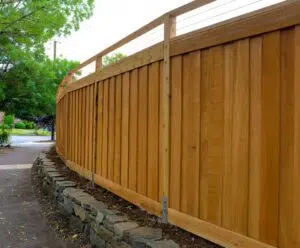
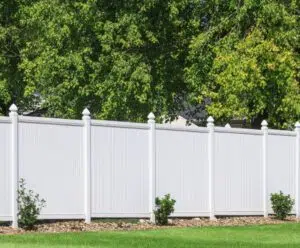
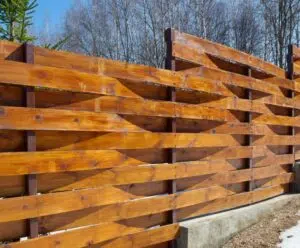
Choose a Complete Fence System
Material matters, but long-term performance also depends on posts, rails, fasteners, slope, gates, drainage, exposure and realistic maintenance.
13. Shade and Tree Cover Should Influence the Decision
Two fences on the same Seattle street can age differently.
A sunny fence may dry quickly.
A fence behind dense vegetation may stay damp longer and accumulate:
- leaves;
- needles;
- dirt;
- algae;
- mildew.
Western Red Cedar’s own maintenance guidance notes that outdoor cedar surfaces can be affected by mildew, algae and moss and that maintenance depends partly on local climatic conditions. (Real Cedar)
Vinyl can also need additional cleaning in shaded areas; current manufacturer guidance specifically notes the possibility of green mildew where direct sunlight is limited. (Weatherables)
Site Test
Before selecting the fence, walk the proposed fence line after wet weather.
Ask:
- Which areas stay damp?
- Where do leaves collect?
- Which sections receive little sun?
- Where does irrigation hit?
- Where is vegetation touching the future fence?
14. Leave Space for the Fence to Be Maintained
Do not install landscaping so tightly against the fence that nobody can inspect or clean it.
Think about:
- shrubs;
- hedges;
- climbing plants;
- raised beds;
- irrigation;
- leaf accumulation.
The hidden side of the fence still ages.
Planning Insight
If you cannot reach a surface, you cannot easily:
- clean it;
- inspect it;
- stain it;
- replace a board;
- adjust hardware.
Maintenance access is part of fence design.
15. Which Material Is Best for Privacy?
Privacy depends more on fence design than simply on material.
All three materials can create substantial privacy.
Consider:
- fence height;
- board spacing;
- panel gaps;
- horizontal vs. vertical design;
- changing grade;
- views from upper stories;
- gaps beneath the fence;
- gate openings.
Wood and Cedar
Can be highly customized on site.
Examples include:
- tight vertical boards;
- board-on-board;
- horizontal privacy designs;
- partial-open sections;
- lattice or trellis accents.
Vinyl
Many systems provide pre-engineered privacy panels with a consistent manufactured appearance.
Key Point
Do not ask:
“Is cedar or vinyl more private?”
Ask:
“Which fence design blocks the actual sightlines on this property?”
16. Plan Privacy From the Neighbor’s View Too
Stand where the neighbor’s windows are relative to your yard.
A six-foot fence may block ground-level views while doing little about:
- a second-story window;
- an elevated neighboring deck;
- an uphill property.
Material will not fix a geometry problem.
Possible solutions may involve:
- strategic fence placement;
- qualifying open architectural features;
- landscaping;
- partial privacy screens.
Any height solution still needs to respect Seattle’s applicable zoning rules. (Seattle.gov)
17. Which Material Is Better on a Sloped Seattle Property?
Wood fencing generally offers substantial site-built flexibility.
It can often be:
- stepped;
- adjusted board by board;
- customized around grade changes.
Vinyl capability depends more heavily on the exact panel system.
Some manufactured systems can accommodate slopes; others rely more on stepped installation.
Ask the Vinyl Supplier
- Can this exact product rack?
- How much slope can it accommodate?
- Will it need to step?
- What happens to the gap underneath?
- How will gates work on the grade?
Do not assume all vinyl products behave identically.
18. Wind Matters—Especially for Solid Privacy Fences
A nearly solid six-foot privacy fence catches more wind than an open picket design.
That makes these details important:
- post system;
- post spacing;
- footing design;
- panel width;
- gate size;
- exposure;
- material system.
Some vinyl manufacturers publish separate high-wind installation guidance, reinforcing that the complete installation system—not merely the PVC material—determines performance. (Weatherables)
Planning Principle
More privacy usually means more wind exposure.
Do not separate privacy design from structural planning.
19. Gates Are Often the Hardest-Working Part of the Fence
Fence-material comparisons often ignore gates.
That is a mistake.
Gates:
- move;
- carry hardware;
- experience repeated loads;
- can sag or shift;
- need clear ground clearance;
- must latch properly.
Plan:
- gate width;
- direction of swing;
- hinge side;
- latch;
- post support;
- grade;
- wheelbarrow/lawn-equipment access;
- trash-bin access.
Bigger Is Not Automatically Better
A wider gate may improve access but can also create greater structural demand.
Choose gate size based on what needs to pass through it.
20. Wood vs. Cedar vs. Vinyl for Repairability
Repairability deserves more weight than it gets in most material comparisons.
Wood / Cedar
Site-built fences often allow:
- individual board replacement;
- rail replacement;
- localized repair;
- refinishing of affected areas.
Matching aged wood color may still take time because new material will look different initially.
Vinyl
Repair methods depend on the system.
A damaged panel, rail, picket or post may require a replacement component that matches the original manufacturer and profile.
Before Buying Vinyl, Ask:
Will matching replacement components still be obtainable if this section is damaged years from now?
That is especially worth asking for proprietary styles and colors.
21. Think About How the Fence Will Age Visually
Do not judge only Day 1.
Picture Year 5 and Year 10.
Pressure-Treated Wood
Appearance changes as wood and finishes weather.
Cedar
Can develop a weathered appearance if allowed to age naturally, while maintained finishes require periodic attention. (Real Cedar)
Vinyl
Maintains a more uniform manufactured appearance but requires cleaning when dirt or organic growth becomes visible. (Weatherables)
Better Question
Which aging process will bother me least?
That is often more useful than asking which fence looks best when brand new.
22. Match the Fence to the Architecture of the House
The fence occupies a large visual area.
It should relate to the property.
Cedar Can Work Well With
- natural landscapes;
- contemporary horizontal designs;
- traditional wood architecture;
- Pacific Northwest-style homes.
Painted or Stained Wood Can Work Well With
- homes requiring a custom color relationship;
- traditional picket designs;
- highly customized fence forms.
Vinyl Can Work Well With
- clean, uniform exterior schemes;
- homeowners who prefer a painted-style appearance without regular repainting;
- properties where consistency is more important than natural variation.
Do not select a material in isolation from:
- siding;
- trim;
- deck;
- hardscape;
- landscaping.
Coordinate the fence color and finish with any planned Seattle house painting or Seattle siding replacement so the exterior reads as one intentional design.
23. Fence Next to a Retaining Wall? Check the Height Rules First
This is a particularly important Seattle-specific issue.
Seattle applies additional fence-height rules when fences are located on bulkheads or retaining walls in required yards. (Seattle.gov)
For a new retaining wall used to raise grade, Seattle currently limits the combined retaining-wall and fence height under applicable conditions. (Seattle.gov)
That means this is not simply:
retaining wall + standard six-foot fence
in every situation.
If your fence interacts with hardscape, see our information on
retaining walls and pavers before finalizing the combined design.
When the fence line intersects grade changes or hardscape, coordinate it with the broader retaining walls and pavers plan before finalizing heights.
24. Front-Yard Fences Need a Different Design Approach
A backyard privacy fence and a front-yard fence should not automatically use the same material and style.
Seattle’s applicable front/street-side setback restrictions can limit fence height to 4 feet. (Seattle.gov)
That changes the design goal.
Instead of full privacy, front fencing may prioritize:
- visual boundary;
- landscaping;
- curb appeal;
- pedestrian gates;
- architectural character.
Open pickets or lower-profile designs may therefore make more sense than copying a backyard privacy fence.
25. Do Not Choose Based Only on Initial Price
Fence cost comparisons online become outdated quickly and often compare specifications that are not equivalent.
A legitimate comparison needs to account for:
- material grade;
- fence height;
- style;
- total length;
- gates;
- slope;
- demolition of the existing fence;
- disposal;
- post system;
- hardware;
- finish;
- access;
- retaining-wall conditions.
One bid may include:
cedar boards + upgraded posts + cap + trim + stain
while another simply says:
wood privacy fence
Those are not equivalent.
26. Compare Lifetime Effort, Not Just Lifetime Cost
An exact 20-year cost model looks scientific but depends on assumptions nobody can guarantee.
Use a simpler homeowner question.
Pressure-Treated Wood
Am I willing to:
- inspect it;
- clean it;
- maintain its finish;
- replace occasional wood components?
Cedar
Am I willing to maintain the desired appearance or accept natural weathering?
Vinyl
Am I willing to clean it and accept a manufactured material with product-specific repair requirements?
The Better Decision
Choose the maintenance pattern you are actually likely to follow.
A theoretically durable material that receives poor maintenance or poor installation is not automatically the better investment.
27. Do Not Ignore the Posts
Homeowners spend most of their time comparing fence boards.
The fence does not stand because of the boards.
It stands because of its structural system.
Pay attention to:
- posts;
- post spacing;
- footing conditions;
- rails;
- gate posts;
- connectors;
- fasteners.
A premium fence panel attached to an inadequate support system is still an inadequate fence.
Construction Insight
Compare complete fence systems, not just visible materials.
For every proposal, ask what is being used for:
- posts;
- rails;
- boards/panels;
- fasteners;
- gates;
- finish.
28. When Pressure-Treated Wood Is the Best Fit
Choose pressure-treated wood when most of these describe you:
- You want a real wood fence.
- Design flexibility matters.
- Your site has slopes or unusual geometry.
- You may want to stain or paint the fence.
- You value localized repairability.
- You accept periodic wood maintenance.
- Cedar’s appearance is not essential.
29. When Western Red Cedar Is the Best Fit
Choose cedar when:
- natural wood appearance is a major priority;
- you want a strong Pacific Northwest aesthetic;
- custom design matters;
- you like wood grain and variation;
- you are comfortable maintaining a finish or allowing natural weathering;
- easy board-by-board customization matters.
Western Red Cedar is particularly strong when appearance and customization are more important than avoiding wood maintenance entirely. Its natural decay resistance is useful, but it should not be misrepresented as maintenance-free. (Real Cedar)
30. When Vinyl Is the Best Fit
Choose vinyl when:
- you do not want routine staining or sealing;
- you prefer consistent manufactured appearance;
- resistance to wood-style decay is a major priority;
- a suitable product exists for your slope and style;
- the manufacturer has appropriate installation information;
- replacement components and warranty terms are acceptable;
- occasional cleaning is more appealing than wood refinishing.
Vinyl is generally strongest for homeowners prioritizing low finish maintenance over natural wood character. Current manufacturer care guidance still recommends cleaning when dirt or mildew appears. (Weatherables)
Which Fence Should You Choose? Quick Decision Table
| If Your Priority Is… | Start by Comparing… |
|---|---|
| Natural PNW appearance | Western Red Cedar |
| Lower-maintenance manufactured surface | Vinyl |
| Flexible wood construction | Pressure-treated wood |
| Custom stain color | Cedar or treated wood |
| Complex sloped site | Site-built wood/cedar first |
| Uniform panel appearance | Vinyl |
| Easy individual-board customization | Wood or cedar |
| Avoiding staining/sealing | Vinyl |
| Natural variation and grain | Cedar |
| Highly custom fence design | Cedar or treated wood |
| Privacy | Any of the three; design matters more |
| Wet/shady property | Compare complete systems and maintenance needs |
| High wind exposure | Evaluate structure and installation, not material alone |
10 Questions to Answer Before Choosing a Fence Material
1. What is the fence supposed to do?
Privacy, pets, boundary, decoration or security?
2. Do I want natural wood or a manufactured appearance?
This can eliminate options quickly.
3. How much maintenance will I really perform?
Not how much you intend to perform during the first week.
How much will you realistically do five years from now?
4. How wet and shaded is the fence line?
Site conditions matter.
5. Is the property sloped?
Confirm that the chosen system can handle the grade.
6. What height is allowed?
Check Seattle zoning and permit requirements for the actual location. (Seattle.gov)
7. How exposed is the fence to wind?
Especially important for solid privacy fences.
8. How will damaged sections be repaired?
Think beyond installation day.
9. What exactly are the posts, rails and fasteners?
Do not evaluate only boards or panels.
10. What should the fence look like after years of weathering?
Choose the aging process you are comfortable living with.
Common Fence-Material Selection Mistakes
Calling Cedar and Wood Two Completely Different Materials
Cedar is wood. Compare cedar with the actual alternative wood specification.
Choosing Only by Initial Price
Different bids may represent different posts, grades, gates and finishes.
Assuming Cedar Needs No Maintenance
Its natural durability does not eliminate cleaning or finish maintenance. (Real Cedar)
Calling Vinyl “Maintenance-Free”
It still needs cleaning and inspection. (Weatherables)
Ignoring the Posts
Panel quality cannot compensate for poor structural support.
Choosing a Fence Before Confirming the Property Line
Do not let an uncertain boundary dictate the layout.
Ignoring Front-Setback Height Rules
Seattle applies different limits in applicable front and street-side setbacks. (Seattle.gov)
Ignoring Slopes
Not every prefabricated system handles grade changes the same way.
Forgetting Wind
A solid privacy fence experiences substantial wind pressure.
Forgetting Gates
Gate posts, hinges and clearances deserve separate planning.
Planting Directly Against the Fence
Leave realistic access for inspection, cleaning and repair.
Choosing a Fence Because It Looks Best on Installation Day
Think about how it will look and be maintained over time.
SEATTLE FENCE MATERIAL FAQ
Seattle Fence Material FAQ
Clear answers to common Seattle questions about cedar, pressure-treated wood, vinyl, maintenance, privacy, slopes, height limits and repairability.
Is cedar or vinyl better for a Seattle fence?
Neither is universally better.
Choose cedar when natural appearance, wood customization and Pacific Northwest character are priorities.
Choose vinyl when minimizing staining and refinishing is more important.
The site’s shade, slope, wind exposure, fence style and maintenance expectations should also influence the decision. Cedar has natural decay-resistance characteristics but still requires maintenance; vinyl avoids wood-style decay but still needs cleaning. (Real Cedar)
Is cedar better than pressure-treated wood for fencing?
It depends on what “better” means.
Cedar offers distinctive natural appearance and natural decay resistance. Pressure-treated wood provides another flexible real-wood option and may fit homeowners who do not need cedar’s particular aesthetic.
Compare:
- grade;
- finish;
- posts;
- rails;
- fasteners;
- maintenance expectations;
rather than material name alone.
Does cedar rot in Seattle rain?
Western Red Cedar has natural decay resistance, but that does not make it immune to all outdoor deterioration or finish problems.
Its industry maintenance guidance specifically addresses moisture-related staining, mildew, algae, moss and regular finish maintenance. (Real Cedar)
Good construction and maintenance still matter.
Does a cedar fence need to be stained?
That depends on the appearance you want and the finish strategy.
Western Red Cedar can be finished with transparent, semi-transparent or solid-color products depending on the desired appearance. (Real Cedar)
If you apply a finish, plan to maintain it rather than assuming it will last indefinitely.
Is vinyl fencing really maintenance-free?
No.
Vinyl generally does not require wood-style staining or sealing, but it still needs periodic cleaning. Shaded areas can develop dirt or mildew that must be removed. (Weatherables)
“Low maintenance” is more accurate than “maintenance-free.”
Is vinyl fencing good for a sloped yard?
It can be, but it depends on the exact fence system.
Ask whether the selected product can rack with the slope or must be installed in steps, and determine what that means for gaps beneath the panels and gate locations.
Do not assume every vinyl product handles slopes identically.
Which fence material provides the most privacy?
Material alone does not determine privacy.
Cedar, treated wood and vinyl can all create privacy fencing.
More important variables include:
- height;
- panel/board spacing;
- grade changes;
- gates;
- neighboring elevations;
- sightlines.
How high can my fence be in Seattle?
Seattle generally limits fences in neighborhood residential and multifamily zones to 6 feet, with qualifying open architectural features potentially adding up to 2 feet. Applicable front and street-side setbacks generally have lower limits. Sloped properties and fences combined with retaining walls have additional rules. (Seattle.gov)
Check the actual property before finalizing the design.
Do I need a permit for a Seattle fence?
Seattle states that a construction permit generally is not required for fences with a total height of 8 feet or less when masonry/concrete elements stay within the City’s specified limits, except in situations such as flood-prone areas. Taller fences require permits. (Seattle.gov)
Remember that zoning height restrictions can still apply even when a construction permit is not required.
Can I build a six-foot privacy fence in my Seattle front yard?
Do not assume so.
Seattle’s applicable neighborhood residential rules generally limit fences in required front and street-side setbacks to 4 feet. (Seattle.gov)
The exact site and zoning need to be checked.
Which fence is easiest to repair?
Site-built wood and cedar often make localized board or rail repair relatively straightforward.
Vinyl repairability depends more on the selected panel system and availability of matching replacement components.
Before choosing any proprietary manufactured fence, ask how damaged panels, rails, gates or posts would be replaced.
What is the lowest-maintenance fence among these three?
For homeowners specifically trying to avoid wood staining and sealing, vinyl is usually the strongest candidate among these three.
However, vinyl still requires cleaning and normal inspection. (Weatherables)
SELECT FOR SEATTLE CONDITIONS
Bottom Line: Cedar, Pressure-Treated Wood or Vinyl?
Do not ask:
“What is the best fence material?”
Ask:
“Which material best matches this property, this design and the maintenance I am actually willing to perform?”
Choose Pressure-Treated Wood When
You want:
- real wood;
- flexibility;
- custom design;
- straightforward modification;
- the ability to stain or paint;
- and you accept normal wood maintenance.
Choose Western Red Cedar When
You want:
- natural Pacific Northwest appearance;
- visible wood grain;
- strong custom-design flexibility;
- natural decay resistance;
- and you accept cleaning and finish maintenance.
Choose Vinyl When
You want:
- no wood staining or sealing;
- consistent manufactured appearance;
- resistance to wood-style rot;
- and you prefer periodic cleaning over refinishing.
For Seattle homes, also verify:
- fence purpose;
- property line;
- height;
- front/street-side setback;
- slope;
- retaining-wall conditions;
- shade;
- vegetation;
- wind;
- gate requirements;
- maintenance access.
The material is only one part of the fence.
The best long-term result comes from matching:
purpose → site → height → structure → material → maintenance
rather than selecting cedar, treated wood or vinyl from appearance alone.
If your material research has progressed to an actual fence layout and construction scope, review CHC Remodeling’s deck and fence services for the build side of the project.
Plan a fence that fits the property.
Review your purpose, layout, height, slope, drainage, material priorities and maintenance expectations with an experienced remodeling team.